Okavango Delta
The world's largest inland delta, where safari meets water.
The Okavango Delta is one of Earth's last great wild places: a vast inland delta where the Okavango River fans out across the Kalahari in a labyrinth of lagoons, floodplains, and palm-fringed islands teeming with wildlife. Mokoro canoes glide through papyrus channels, elephants wade through waist-deep water, and the night sky is among the darkest on the continent.
We also arrange Wilderness Jao and Vumbura Plains, Duba Plains, and andBeyond Sandibe across Moremi, reached via Maun.
Wildlife Seekers · Photographers · Safari Purists
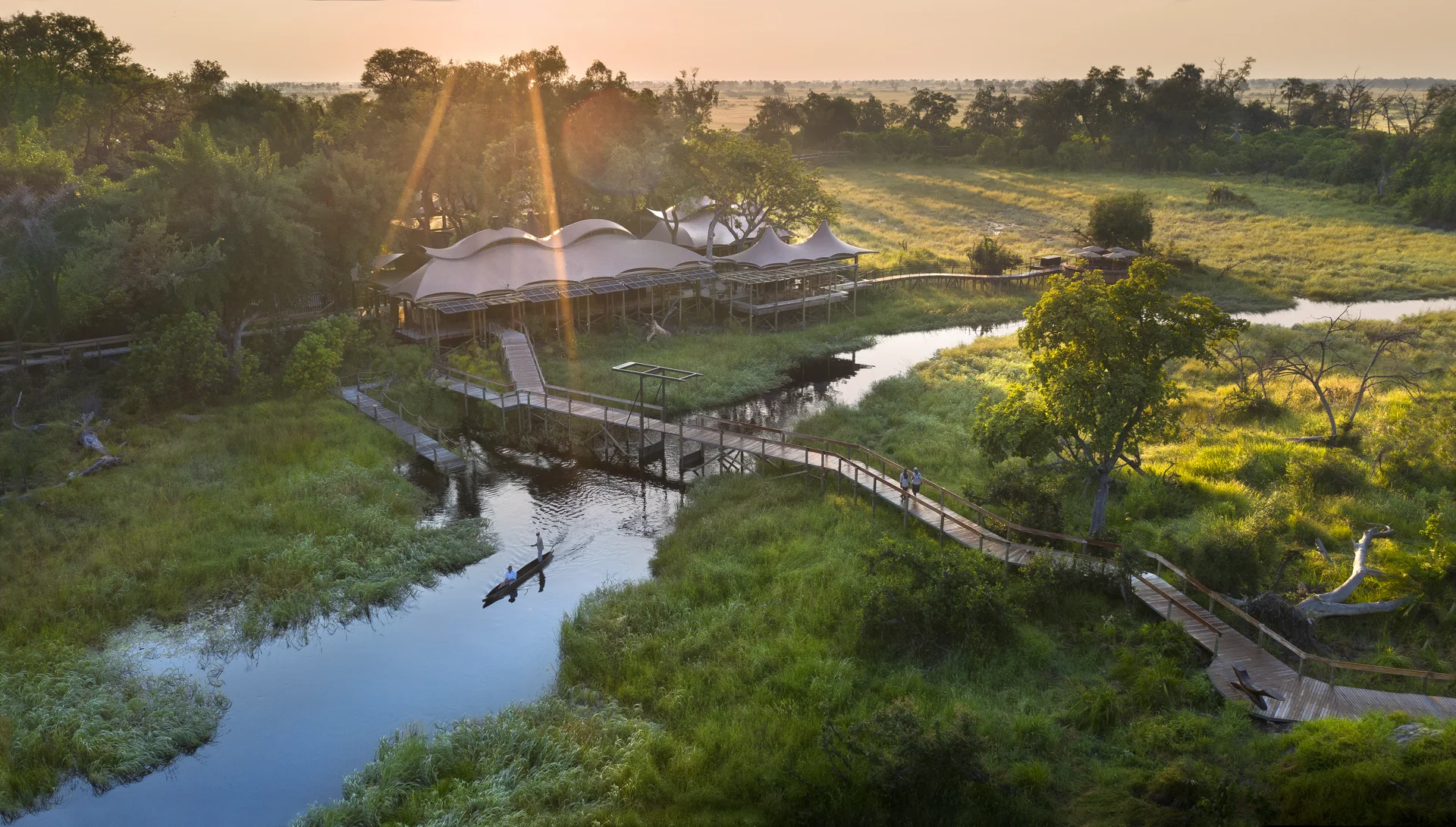
Fly-in safari lodges in one of Africa's most remote ecosystems.
Xigera Safari Lodge
Rewilded luxury on an island in the delta
- Solar-powered
- Mokoro safaris
- Star beds
&Beyond Nxabega
Intimate tented camp in the delta's heart
- 9 tented suites
- Water and land safaris
- Walking safaris
Mombo Camp
The "Place of Plenty": Africa's premier game lodge
- Chief's Island location
- Big Five density
- Legendary guiding
Bush dining under the delta sky.
- 01Sundowner on a mokoro as hippos surface
- 02Bush breakfast on a palm island after a morning walk
- 03Boma dinner under southern stars
- 04Gin-and-tonic stop at a scenic lagoon viewpoint
Silence punctuated only by birdsong and distant elephant rumbles.
- 01Dawn mokoro glide through papyrus channels
- 02Elephant crossing, a herd wading through the floodplain
- 03Night sounds from the tent, lion calls across the delta
- 04Walking safari in complete silence with an armed guide
Luxury Properties in Okavango Delta
Exceptional properties in Okavango Delta, selected for their distinction and service
Frequently Asked About Okavango Delta
What is the best time to visit Okavango Delta?+
May to October offers the dry season with peak flooding (June-August), when wildlife concentrates around water sources and game viewing is exceptional. Temperatures are pleasant (15-28°C), though nights can be cold. December to March brings the green season with dramatic afternoon storms, fewer travelers, excellent birding with 400+ species, and newborn animals, though some camps close and certain areas become inaccessible. July and August see the highest visitor numbers and premium pricing.
How many days do you need in Okavango Delta?+
Plan 3-5 nights to fully experience the Delta's ecosystems and activities. A 4-night itinerary works well: spend 2 nights in a water-based camp for mokoro excursions and boat safaris, then 2 nights at a land camp for game drives and walking safaris. This allows you to experience both the permanent and seasonal floodplains while adjusting to the rhythm of twice-daily safari activities without feeling rushed.
What are the best luxury hotels in Okavango Delta?+
Mombo Camp by Wilderness Safaris sits on Mombo Island with exceptional predator sightings and nine elevated suites starting at $2,200 per person nightly. Sanctuary Chief's Camp offers ten pavilions with private plunge pools from $1,800 per person, known for its location on Chief's Island. Xigera Safari Lodge features contemporary design with twelve suites from $1,600 per person, emphasizing art and sustainability alongside traditional safari experiences.
Is Okavango Delta safe for tourists?+
The Delta is very safe with minimal crime affecting tourists, and all activities are guided by trained professionals who manage wildlife encounters. Malaria prophylaxis is essential year-round, with highest risk December-May. Solo female travelers are safe within camps and on guided activities, though wilderness areas require constant guide supervision. Avoid swimming except in designated camp pools, as crocodiles and hippos are present. Medical evacuation insurance is critical given the remote location, with nearest hospitals in Maun requiring charter flights.
Is Okavango Delta accessible for travelers with mobility challenges?+
The Delta presents significant challenges for wheelchair users due to soft sand, water-based transport, and elevated walkways at camps. Belmond Eagle Island Lodge and andBeyond Xaranna offer ground-level suites with wider doorways, though true wheelchair accessibility is limited. Most activities involve stepping into mokoros (dugout canoes), climbing into safari vehicles, and walking on uneven terrain. Book private accessible charter flights in advance, and contact camps directly to discuss specific mobility needs. Some can arrange private game drives and boat safaris with advance notice.
Is Okavango Delta good for families with children?+
Many premium camps accept children only from age 8-12 due to wildlife proximity and the quiet, adult-focused atmosphere. Vumbura Plains and Xudum Lodge welcome families with connecting rooms and private vehicle options. Activities adapt for older children (10+) with shorter drives and nature-focused programs, though long periods of quiet observation may challenge younger kids. The remote location, charter flights in small planes, early wake-ups, and lack of swimming areas make this better suited for families with teenagers.
What is the one thing you should not miss in Okavango Delta?+
Take a mokoro excursion at dawn through the narrow reed-lined channels, not for game viewing, but for the profound silence broken only by bird calls and the guide's pole pushing through water. This ancient dugout canoe method reveals the Delta's smaller details: reed frogs, jewel-colored kingfishers, and water lilies at eye level. Most travelers fixate on big game drives, but this contemplative water journey captures why the Delta feels so different from any other safari destination.
Journeys that rhyme with this one
Every great destination leads to another. Here are three that share the spirit of where you've been.
Ready to explore Okavango Delta?
Let us craft a bespoke journey tailored to what you actually want from it. No planning fees, and a reply inside a day.