Peloponnese
Classical Greece
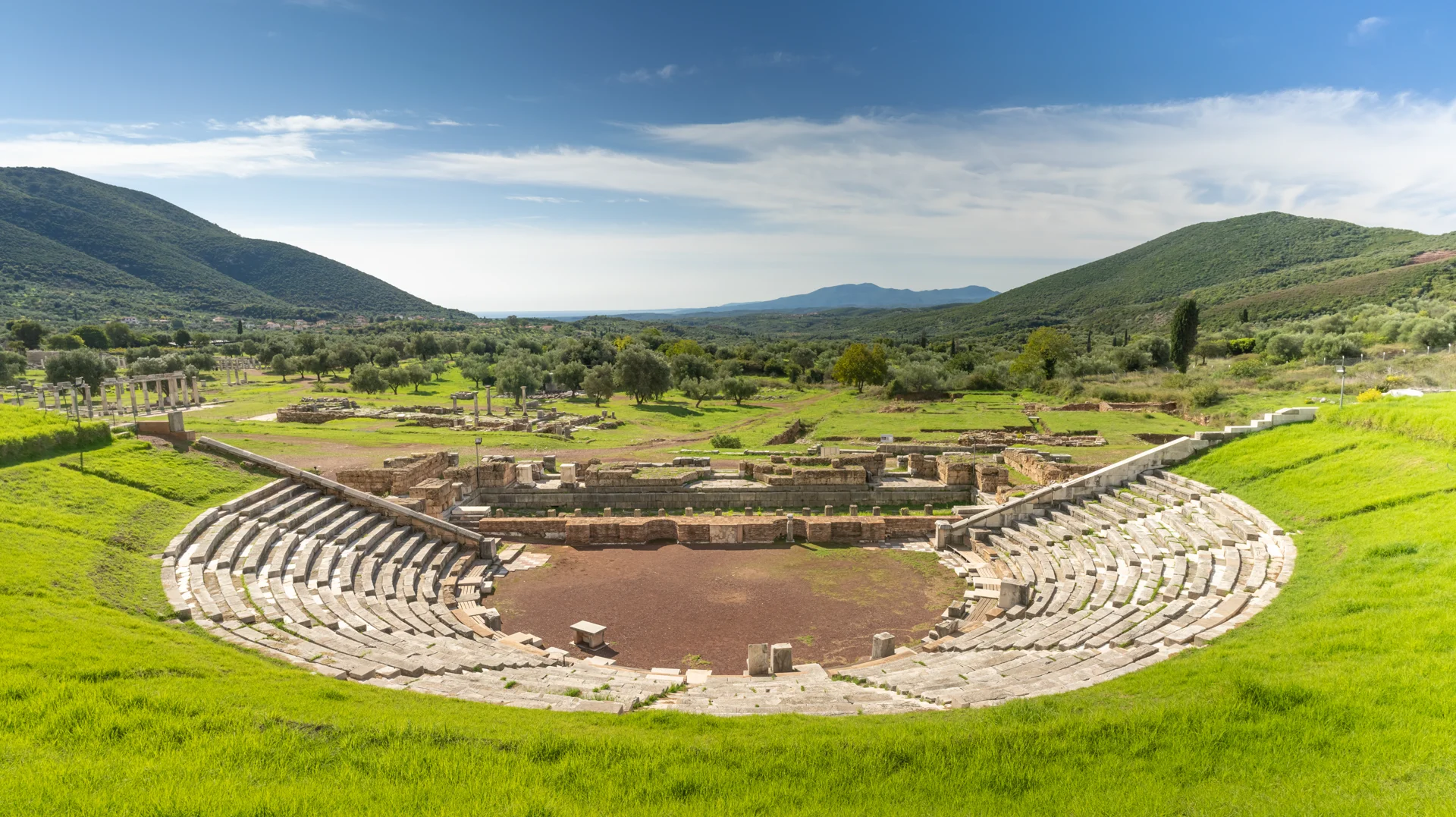
The heartland of ancient Greece: where Sparta and Mycenae rose and fell, where ancient theaters still host performances, and where stone villages cling to wild mountains. The Peloponnese offers Greece without the crowds. Amanzoe, Aman's Greek outpost, rises from the Argolid hills like a contemporary echo of the ancient temples below. Its colonnaded pavilions framing the Aegean in a silence that feels almost sacred.
We also arrange Costa Navarino and The Romanos, and days in Nafplio, Ancient Olympia, and along the Mani, with Voidokilia beach close by and Kalamata (KLX) the gateway.
History Lovers · Wellness Seekers · Culture Enthusiasts · Couples
Aman's Greek masterpiece and boutique retreats in storied settings.
Amanzoe
Aman's Hellenistic-inspired retreat on a hilltop above Porto Heli.
- Beach club
- Spa pavilions
- Ancient site access
Euphoria Retreat
Holistic wellness in a Byzantine-inspired setting.
- Sphere pool
- Wellness programs
- Mountain setting
Kinsterna Hotel
A Byzantine mansion restored with exquisite taste.
- Working farm
- Historic architecture
- Monemvasia access
Farm traditions and mountain ingredients in their purest forms.
- 01Olive oil tasting from ancient groves
- 02Dinner at Amanzoe overlooking the Aegean
- 03Wine tour through the Nemea appellation
- 04Farm-to-table lunch at Kinsterna
The silence of ancient theaters and empty archaeological sites.
- 01Standing alone in the theater at Epidaurus at dawn
- 02Entering Mycenae through the Lion Gate
- 03Walking the streets of Monemvasia at twilight
Luxury Properties in Peloponnese
Exceptional properties in Peloponnese, selected for their distinction and service
Frequently Asked About Peloponnese
What is the best time to visit Peloponnese?+
April to June and September to October offer the most comfortable conditions for exploring Peloponnese's archaeological sites and coastal towns, with temperatures ranging from 20-28°C (68-82°F). July and August bring intense heat, often exceeding 35°C, and crowds at popular beaches and ruins like Epidaurus and Mycenae. Spring wildflowers blanket the countryside in May, while autumn provides warm swimming conditions with significantly fewer tourists. Winter (November-March) sees many coastal hotels and restaurants closed, though Nafplio and inland areas remain accessible.
How many days do you need in Peloponnese?+
A well-paced itinerary requires 5-7 nights to experience the region's highlights without exhausting travel days. Spend two nights in Nafplio as your base for Mycenae and Epidaurus, two nights in the Mani Peninsula for coastal villages and Byzantine towers, and two nights in Olympia or the western coast. Add an extra night if you want to explore Monemvasia's medieval fortress town or visit the vineyards around Nemea. Driving distances between major sites range from 1.5-3 hours, making a rental car essential.
What are the best luxury hotels in Peloponnese?+
Amanzoe near Porto Heli offers private pavilions with infinity pools overlooking the Argolic Gulf, along with a world-class spa and beach club starting at $1,500 per night. Euphoria Retreat in Mystras combines thermal spa treatments with spiritual wellness programs in a mountain setting from $800 per night. For a coastal experience, Westin Costa Navarino provides family-friendly luxury with multiple pools, golf courses, and direct beach access from $400 per night. Kinsterna Hotel in Monemvasia, a restored Byzantine estate, delivers intimate luxury with just 35 rooms from $350 per night.
Is Peloponnese safe for tourists?+
Peloponnese is very safe for tourists, including solo female travelers, with low crime rates throughout the region. The main concerns are road safety: mountain roads can be narrow with hairpin turns, and Greek drivers are aggressive, and summer heat exhaustion when visiting archaeological sites without shade. Tap water is safe to drink, though many locals prefer bottled. Watch for overcharging at tourist-heavy tavernas in Nafplio and Olympia by checking prices before ordering. No special vaccinations are required, and healthcare facilities are adequate in larger towns like Kalamata and Tripoli.
Is Peloponnese accessible for travelers with mobility challenges?+
Peloponnese presents significant accessibility challenges due to ancient cobblestone streets, uneven archaeological sites, and mountainous terrain. Major sites like Ancient Olympia and Epidaurus have partial wheelchair access to lower areas, but Mycenae and Mystras involve steep climbs. Amanzoe and Costa Navarino offer wheelchair-accessible rooms with roll-in showers, but many boutique hotels occupy historic buildings without elevators. Arrange private transportation in advance, as public transit is limited and most taxis lack wheelchair lifts. Nafplio's waterfront promenade is flat and accessible, though the old town's alleys are not.
Is Peloponnese good for families with children?+
Peloponnese works well for families with children aged 8 and above who can appreciate historical sites and handle moderate walking. Costa Navarino is purpose-built for families with kids' clubs, shallow beaches, and activities like olive oil workshops. Ancient Olympia engages children with its Olympic history and interactive museum. Beach towns like Stoupa and Kardamyli offer calm swimming conditions. Be realistic that marathon days touring ruins will exhaust younger children: balance archaeological visits with beach time. Many tavernas welcome families, and hotels like Kinsterna provide connecting rooms, though most luxury properties cater primarily to couples.
What is the one thing you should not miss in Peloponnese?+
Drive the Mani Peninsula's southern tip from Areopoli to Vathia, where stone tower houses rise from barren hillsides above turquoise coves. This 90-minute route captures Peloponnese's raw character better than any archaeological site: stop at Limeni for lunch at Kiki's Taverna where tables sit meters from the water. Most travelers skip this region entirely for Nafplio and Olympia, but the Mani's medieval towers, deserted beaches, and cave systems reveal Greece beyond the classical narrative. Visit on a weekday between April and June for complete solitude on roads and beaches.
Journeys that rhyme with this one
Every great destination leads to another. Here are three that share the spirit of where you've been.
Ready to explore Peloponnese?
Let us craft a bespoke journey tailored to what you actually want from it. No planning fees, and a reply inside a day.