Why choose Botswana for safari?
Botswana is ideal for travelers who value remoteness, small camps, private concessions, excellent guiding, and a mix of water-based and land-based safari experiences.
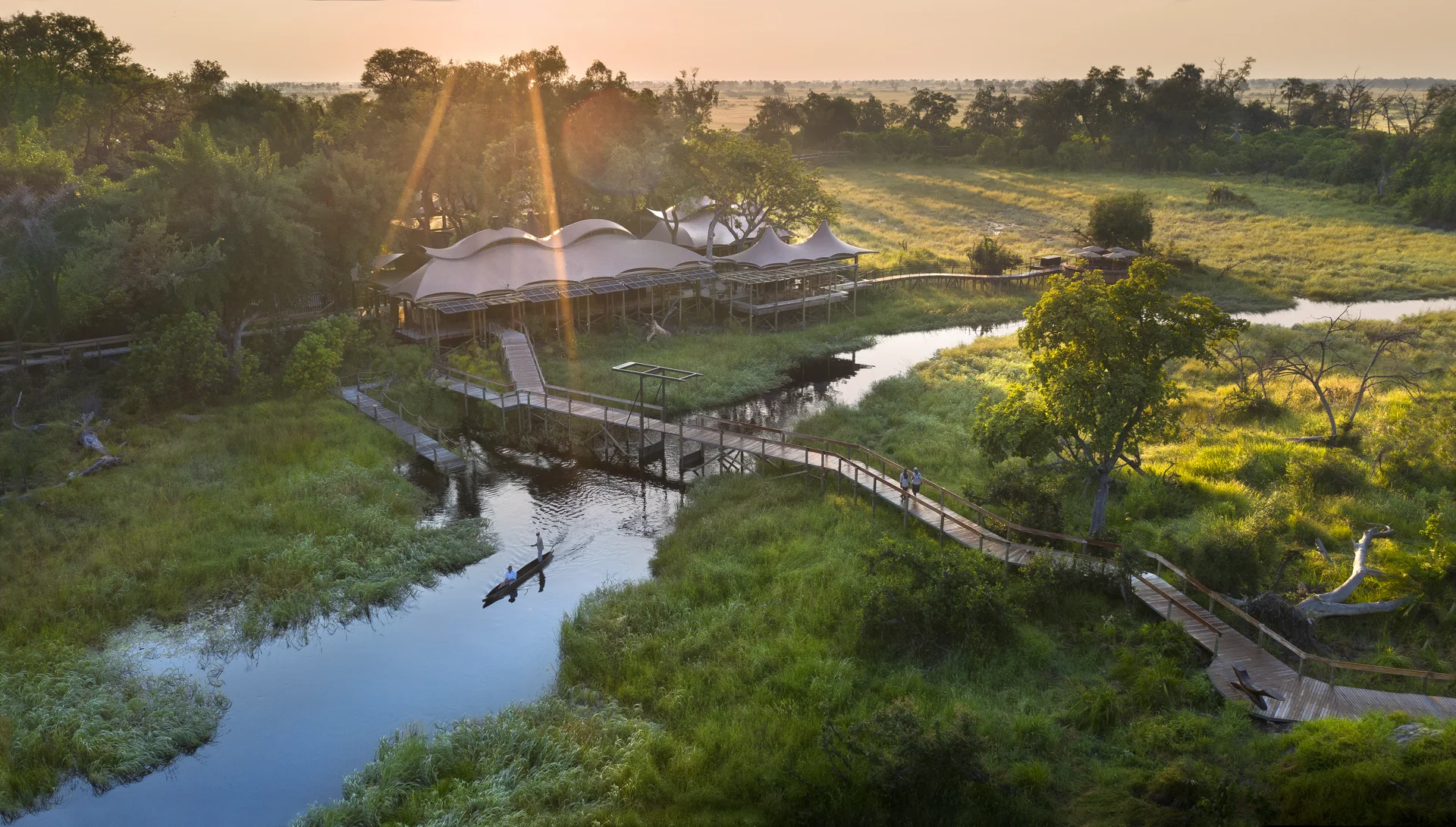
A water-and-wilderness safari for travelers who want remoteness, high-quality guiding, small camps, mokoro channels, and wildlife without heavy crowds.
A luxury botswana safari should be planned around season, region sequence, guide quality, camp style, transfer rhythm, and traveler fit. Aurelle uses the destination, timing, ages, privacy needs, and purpose of travel to shape a private safari rather than treating lodges as interchangeable inventory.
June to October for peak Delta water and dry-season wildlife; November to March for green-season value and birding.
7 to 10 nights across two or three camps.
Remote wilderness, Okavango Delta, Small camps, Repeat safari travelers
A strong safari balances season, region, guide quality, room style, transfer rhythm, vehicle density, and who is traveling.
Balance wet and dry camps so you experience both water channels and classic game drives.
Use private concessions for exclusivity, night drives, and walking where appropriate.
Plan fly-in routing carefully because camp combinations shape the whole safari rhythm.
Maun arrival
Okavango wet camp
Private dry camp
Chobe or Victoria Falls extension
Botswana is ideal for travelers who value remoteness, small camps, private concessions, excellent guiding, and a mix of water-based and land-based safari experiences.
Yes. Delta water levels and wildlife movement change through the year, so the best camp combination depends on timing and whether you want mokoro, boating, walking, or predator-focused drives.
Botswana can work for first-time travelers, but it is especially rewarding for travelers who want a more remote, high-investment safari with fewer crowds and smaller camps.
Last reviewed May 2026 by Aurelle Travel advisory team.
Safari camp and lodge operating seasons
Camp opening dates, family policies, private vehicle rules, and airstrip logistics vary by region and season.
Used as one input for destination briefings and traveler preparation.
Aurelle safari inquiry patterns
Common questions about migration timing, family ages, honeymoon privacy, malaria awareness, and beach extensions inform this guide.