Paro Valley
Gateway to the kingdom, Tiger's Nest and the legendary landing.
Paro Valley is most visitors' first glimpse of Bhutan: the dramatic airport landing between mountain peaks, the ancient dzongs, and the legendary hike to Tiger's Nest monastery clinging to a cliff 3,000 feet above the valley floor.
We also reach the Chele La pass and the Kyichu Lhakhang, with Paro (PBH) the kingdom's only airport.
Hikers · Spiritual Seekers · First-Time Visitors
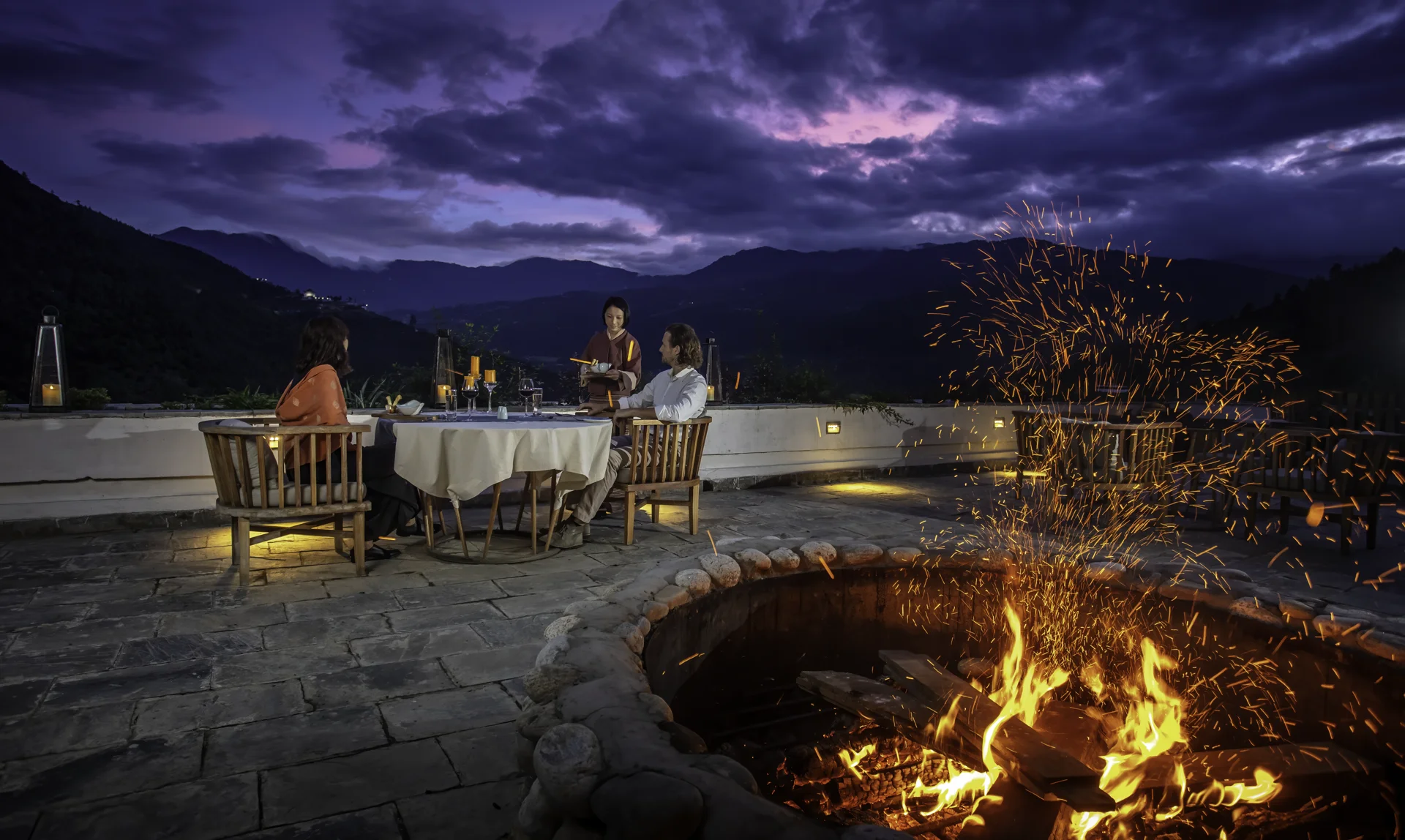
Traditional Bhutanese hospitality.
Amankora Paro
- Hot stone baths
- Valley views
- Dzong visits
Six Senses Paro
- Wellness programs
- Farm dining
- Flying farmhouse
COMO Uma Paro
- Trekking base
- COMO Shambhala spa
- Archery
- 01Ema datshi, chili and cheese
- 02Farmhouse lunch
- 03Red rice specialties
- 04Butter tea ceremony
- 01Tiger's Nest at dawn
- 02Rinpung Dzong
- 03Archery matches
- 04Prayer flag passes
Luxury Properties in Paro
Exceptional properties in Paro, selected for their distinction and service
Frequently Asked About Paro Valley
What is the best time to visit Paro Valley?+
March through May and September through November offer the most favorable conditions for visiting Paro Valley. Spring brings blooming rhododendrons and clear skies with daytime temperatures around 15-20°C, while autumn provides crisp visibility perfect for mountain views and the popular trek to Tiger's Nest Monastery. These peak seasons see moderate tourist numbers due to Bhutan's daily tariff system, which naturally limits crowds. Winter (December-February) is cold but clear, while monsoon season (June-August) brings heavy rain that can disrupt flights and trekking plans.
How many days do you need in Paro Valley?+
Three to four nights allows you to experience Paro's highlights without rushing. Day one should cover acclimatization and exploring Paro town and the National Museum. Day two is essential for the Tiger's Nest hike, which takes 5-6 hours round trip. Day three can include Kyichu Lhakhang temple and a farmhouse lunch, with optional excursions to Chele La Pass. Many travelers use Paro as a base for day trips to nearby Thimphu (90 minutes) or spend their final morning visiting local artisan workshops before departure.
What are the best luxury hotels in Paro Valley?+
Amankora Paro offers 24 suites with heated floors, private terraces overlooking pine forests, and exclusive access to a traditional hot stone bath house. COMO Uma Paro provides contemporary design with floor-to-ceiling windows, in-room yoga mats, and a knowledgeable guide team for customized treks. Le Méridien Paro Riverfront combines modern amenities with traditional Bhutanese architecture, featuring riverside views and the valley's largest hotel spa. Each property includes cultural programming like archery lessons and meditation sessions with resident monks.
Is Paro Valley safe for tourists?+
Paro Valley is exceptionally safe with virtually no violent crime, petty theft, or tourist scams. Solo female travelers move freely without harassment, though conservative dress (covering shoulders and knees) shows cultural respect. The main health consideration is altitude: Paro sits at 2,200 meters, so take the first day slowly and stay hydrated. Tap water isn't potable; drink bottled or filtered water. Your government-assigned guide accompanies you at all times, which some find restrictive but significantly enhances safety. Travel insurance covering emergency helicopter evacuation is recommended.
Is Paro Valley accessible for travelers with mobility challenges?+
Paro Valley presents significant accessibility challenges due to steep temple stairs, uneven terrain, and limited infrastructure. COMO Uma Paro and Le Méridien have ground-floor rooms and ramps in public areas, though traditional architecture means limited elevator access. The Tiger's Nest monastery requires a steep 900-meter ascent on rough trails. Horses can assist partway but cannot reach the monastery itself. Private adapted vehicles can be arranged through tour operators for valley touring. Kyichu Lhakhang temple has minimal steps and is the most accessible religious site. Be candid with your operator about specific needs when booking.
Is Paro Valley good for families with children?+
Paro works well for families with children aged 8 and above who can handle moderate hiking and altitude. The Tiger's Nest trek is challenging for young children, but horses reduce the climb and kids often enjoy the adventure. COMO Uma Paro and Le Méridien provide family suites and can arrange archery lessons, cooking classes, and farmhouse visits that engage children. The National Museum's armor and weaponry displays fascinate older kids. Children under 6 visit Bhutan free of the Sustainable Development Fee, ages 6-12 pay half. Altitude adjustment takes longer for children, so plan rest time on arrival day.
What is the one thing you should not miss in Paro Valley?+
Skip the crowded midday Tiger's Nest visits and instead arrange a private sunrise trek starting at 5:30 AM when mist clings to the cliffs and you'll have the trail largely to yourself. Your guide can coordinate early monastery access before the day-trippers arrive, allowing quiet meditation in the sacred caves where Guru Rinpoche legendarily flew on a tigress. The experience transforms from photo opportunity to spiritual journey. Pack layers, it's cold at dawn but warms quickly, and request a thermos of butter tea from your hotel. Book this specifically with your tour operator; they must arrange monastery permissions in advance.
Journeys that rhyme with this one
Every great destination leads to another. Here are three that share the spirit of where you've been.
Ready to explore Paro Valley?
Let us craft a bespoke journey tailored to what you actually want from it. No planning fees, and a reply inside a day.