Punakha
Valley of fertility, Bhutan's most beautiful dzong and warmer climes.
Punakha Valley is Bhutan's heartland: where the Mo Chhu and Pho Chhu rivers meet at Punakha Dzong. Lower and warmer than other valleys, this is where Bhutan's rice grows and the old capital stood.
We also arrange Pemako and the walk to the Khamsum Yulley Namgyal chorten.
Photographers · Nature Lovers · Cultural Travelers
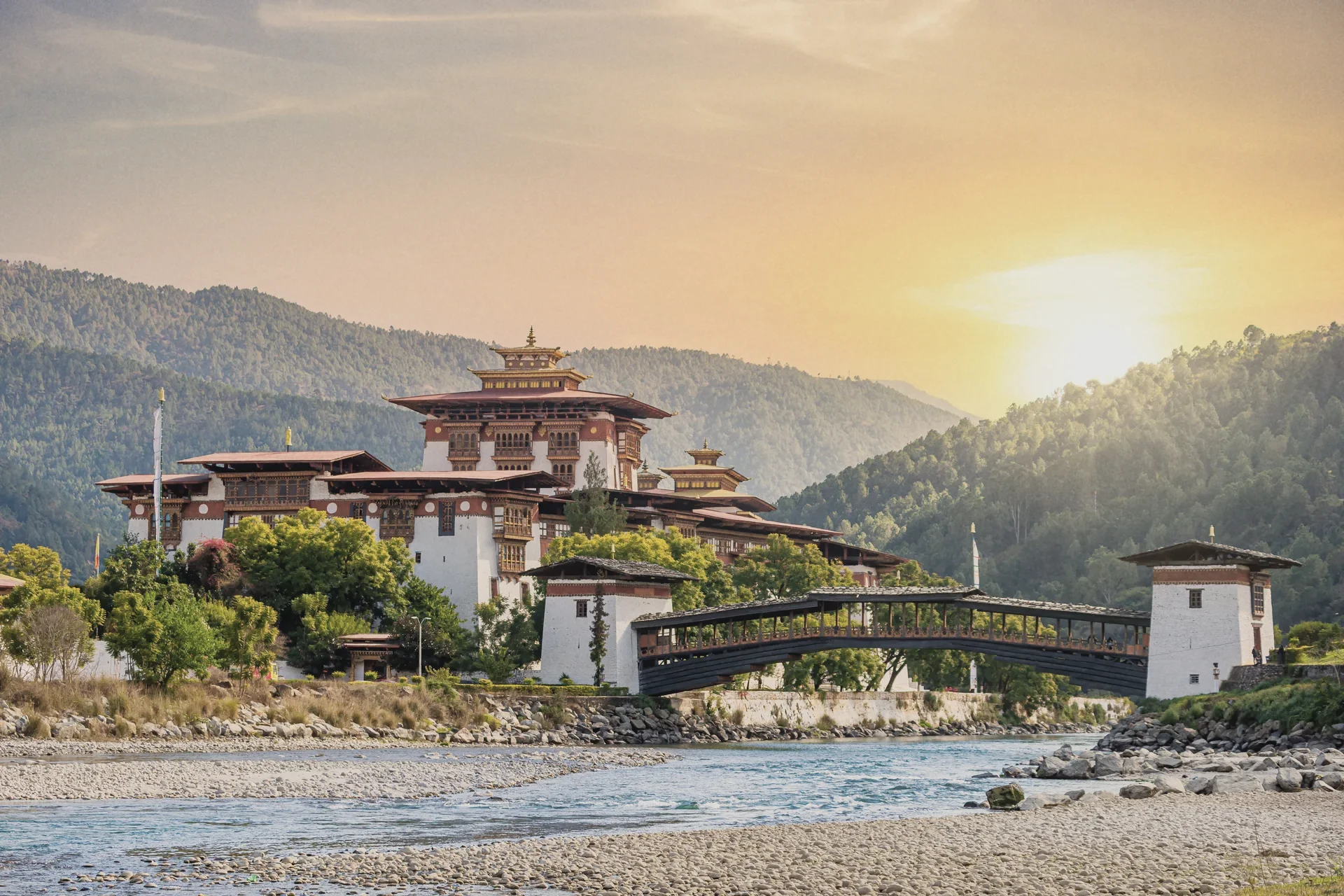
At the confluence of two rivers.
Amankora Punakha
- River walks
- Farm setting
- Dzong access
Six Senses Punakha
- Valley views
- Wellness
- Hot stone baths
COMO Uma Punakha
- Riverside setting
- Kayaking
- Hiking
- 01Rice valley lunch
- 02River picnic
- 03Local arra tasting
- 04Farm cooking
- 01Punakha Dzong at dawn
- 02Suspension bridge crossing
- 03River rafting
- 04Chimi Lhakhang fertility temple
Luxury Properties in Punakha
Exceptional properties in Punakha, selected for their distinction and service
Frequently Asked About Punakha
What is the best time to visit Punakha?+
March through May offers warm days (20-25°C) with blooming jacaranda trees painting the valley purple, while September to November delivers clear skies and pleasant temperatures ideal for trekking. Winter (December-February) can be surprisingly mild in the valley due to lower elevation, attracting fewer tourists. Avoid June through August when monsoon rains make roads slippery and leeches common on hiking trails. Spring festivals like Punakha Drubchen draw crowds but provide authentic cultural immersion worth planning around.
How many days do you need in Punakha?+
Allocate 2-3 nights to properly experience Punakha without rushing. Day one should cover Punakha Dzong and a walk across the suspension bridge to Chimi Lhakhang Temple. Day two, tackle the 3-hour hike to Khamsum Yulley Namgyal Chorten for valley views, then enjoy river rafting on the Mo Chhu. A third night allows time for Sangchhen Dorji Lhuendrup Nunnery or simply relaxing at your lodge after the fast-paced Thimphu-Paro circuit.
What are the best luxury hotels in Punakha?+
COMO Uma Punakha offers 11 villas with private decks overlooking rice paddies, plus an excellent spa and adventure concierge for private rafting trips ($800-1,200/night). Amankora Punakha features eight suites with traditional bukhari fireplaces and valley views, positioned near Punakha Dzong ($1,600-2,400/night). Dhensa Boutique Resort provides contemporary rooms with floor-to-ceiling windows facing the Mo Chhu River and easier access to trailheads ($400-700/night). All three properties arrange private monastery visits and picnics by the river.
Is Punakha safe for tourists?+
Punakha is extremely safe with virtually no violent crime, though roads from Thimphu via Dochula Pass require experienced drivers during monsoon season. Solo female travelers face no significant concerns beyond standard precautions. No malaria risk exists at this elevation (1,200m), but ensure adequate travel insurance as medical facilities are basic: serious cases require evacuation to Thimphu. Watch for stray dogs near Punakha Dzong (rabies risk) and don't photograph inside temples without permission, which can cause genuine offense rather than legal issues.
Is Punakha accessible for travelers with mobility challenges?+
Punakha presents significant accessibility challenges due to steep temple stairs, uneven terrain, and limited infrastructure. COMO Uma and Amankora offer ground-floor rooms with step-free access, but neither has fully adapted bathrooms with roll-in showers. Punakha Dzong requires climbing 40+ wooden stairs with no ramp alternative. Private vehicles can reduce walking, but most trails and suspension bridges are impassable for wheelchairs. Arrange a private tour company in advance to customize a driving-focused itinerary focusing on viewpoints rather than temple interiors.
Is Punakha good for families with children?+
Punakha works well for families with children aged 8 and above who can handle moderate hiking and temple visits. COMO Uma provides family suites and can arrange shorter treks to rice paddies where kids meet farmers, while the Mo Chhu River rafting (Class II-III rapids) suits ages 12+. Dhensa Resort offers more affordable family accommodation with connecting rooms. The fertility temple (Chimi Lhakhang) features quirky phallus symbols that amuse older children but may prompt awkward questions. Avoid bringing toddlers due to steep stairs at most cultural sites.
What is the one thing you should not miss in Punakha?+
Join the 40-minute morning puja (prayer ceremony) at Punakha Dzong, arriving by 7:30 AM before tourist crowds. You'll sit among monks as they chant, smell incense wafting through courtyards, and witness daily rituals unchanged for centuries: far more meaningful than a midday walkthrough. Most luxury hotels can arrange this with your guide but won't suggest it unless asked. Bring a light jacket as the dzong stays cold at dawn, and leave your phone behind to avoid the temptation of breaking photography restrictions.
Journeys that rhyme with this one
Every great destination leads to another. Here are three that share the spirit of where you've been.
Ready to explore Punakha?
Let us craft a bespoke journey tailored to what you actually want from it. No planning fees, and a reply inside a day.