Amboseli
Kilimanjaro Views
Elephants silhouetted against Africa's highest peak, Amboseli offers one of the continent's most iconic images. Some of Africa's largest tuskers roam beneath Kilimanjaro's snow-capped dome. Angama Amboseli brings the Angama ethos to this extraordinary setting, tented camps designed so that Kilimanjaro fills the frame from your pillow at dawn.
We also reach the Chyulu Hills and Tsavo beyond Kilimanjaro's shadow, flown from Nairobi's Wilson.
Photographers · Elephant Lovers · Mountain Seekers · Safari Enthusiasts
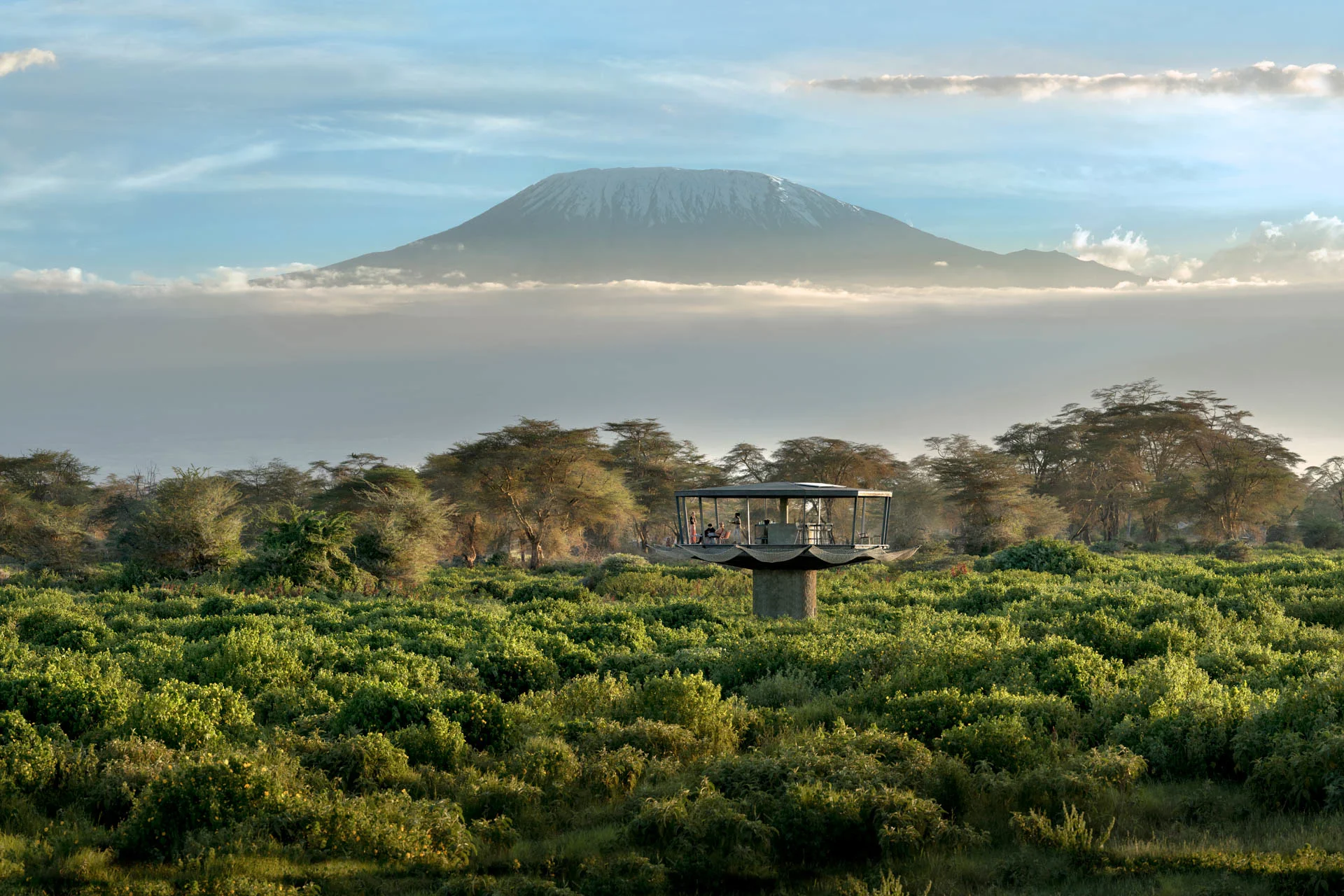
Lodges and camps positioned for Kilimanjaro's drama.
Angama Amboseli
The newest Angama property with mountain views.
- Kilimanjaro views
- Intimate scale
- Quality guiding
Ol Donyo Lodge
Private conservancy with riding safaris.
- Horseback safaris
- Star beds
- Community-owned
Tortilis Camp
Eco-camp beneath umbrella thorn trees.
- Private conservancy
- Walking safaris
- Authentic camp
Safari meals with mountain views.
- 01Breakfast as Kilimanjaro emerges from clouds
- 02Sundowner watching elephants at the swamp
- 03Bush dinner under the stars
- 04Maasai cultural experience
The majesty of elephants beneath Africa's highest peak.
- 01Kilimanjaro at first light
- 02Matriarch leading her family across the plain
- 03Silence of the dry lake bed at sunrise
Luxury Properties in Amboseli
Exceptional properties in Amboseli, selected for their distinction and service
Frequently Asked About Amboseli
What is the best time to visit Amboseli?+
June to October offers the driest conditions and clearest views of Kilimanjaro, with peak game viewing as animals congregate around water sources. January to February provides another excellent window with minimal cloud cover obscuring the mountain. March to May sees heavy rains that can make roads impassable, while November to December brings shorter rains with afternoon cloud buildup that often hides Kilimanjaro. Visitor numbers peak in July and August, so shoulder months offer better photographic opportunities with fewer safari vehicles.
How many days do you need in Amboseli?+
Allocate 2-3 nights to properly experience Amboseli's elephant herds and photograph Kilimanjaro at different times of day. A typical itinerary includes arrival with an afternoon game drive, a full day exploring the park with early morning and late afternoon drives when light is optimal, and a departure morning drive. The park is compact at 150 square miles, making it less diverse than larger reserves, so additional nights yield diminishing returns unless you're a dedicated wildlife photographer.
What are the best luxury hotels in Amboseli?+
Tortilis Camp offers 16 tented suites with direct Kilimanjaro views from private verandas and a watering hole that attracts elephants at dusk. Ol Tukai Lodge sits inside the park with 80 rooms featuring floor-to-ceiling windows framing the mountain, plus convenient access for dawn drives. Angama Amboseli, opening in 2024, provides contemporary design with elevated views across the ecosystem. Each property arranges private game drives and walking safaris on conservancy land adjacent to the park.
Is Amboseli safe for tourists?+
Amboseli is safe for tourists with standard safari precautions: always stay in your vehicle unless explicitly permitted to exit, and never approach elephants on foot. Malaria prophylaxis is essential as this is a high-risk area year-round; the dusty conditions can also irritate respiratory systems, so bring masks for game drives. Solo female travelers face no particular concerns within camps and on organized drives. The main road from Nairobi crosses areas where vehicle breakdowns can be problematic, so charter flights eliminate that risk entirely.
Is Amboseli accessible for travelers with mobility challenges?+
Amboseli presents considerable challenges for wheelchair users due to soft volcanic soil that vehicles frequently get stuck in, making standard safari vehicles difficult to adapt. Tortilis Camp and Ol Tukai Lodge offer ground-level rooms with accessible bathrooms, though pathways are unpaved and uneven. Private game drives can be arranged with higher vehicles requiring assistance to board, and photographic hides are ground-level wooden structures. Advance coordination with camps is essential to arrange porter assistance and assess whether current terrain conditions allow for meaningful access to game viewing areas.
Is Amboseli good for families with children?+
Amboseli works well for families with children aged 6 and up who can manage 3-4 hour game drives and appreciate elephants without requiring constant entertainment. Tortilis Camp accepts children of all ages with family tents, while many camps set minimum ages at 6-8 years. The park's compact size means shorter drives than larger reserves, and elephant encounters are virtually guaranteed. Children must remain quiet and seated during drives, which becomes tedious for younger kids, and most camps lack pools or dedicated children's programs to fill downtime between safaris.
What is the one thing you should not miss in Amboseli?+
Position yourself at Observation Hill before sunrise when Kilimanjaro emerges from darkness and elephant herds move across the swamps below with the mountain as backdrop. This is the signature shot that defines Amboseli. Most visitors photograph elephants at midday, but dawn offers pink light on the snow-capped peak and active wildlife movement. Bring a telephoto lens and tripod, and skip the crowded midday swamp viewpoints where dozens of vehicles congregate. This early commitment separates adequate Amboseli photos from extraordinary ones.
Journeys that rhyme with this one
Every great destination leads to another. Here are three that share the spirit of where you've been.
Ready to explore Amboseli?
Let us craft a bespoke journey tailored to what you actually want from it. No planning fees, and a reply inside a day.