A Paris of One’s Own
The City Does Not Wait for You
Everyone arrives in Paris with a version of it already formed — assembled from novels, films, a particular photograph of a zinc rooftop in the rain. The city tolerates this. It has been the subject of more projection than any other place on earth, and it carries the weight of all that expectation with a shrug that is itself distinctly Parisian.
The Paris worth knowing, however, is not the one you imagined. It is quieter, stranger, more contradictory. It is the city where a world-class meal can be had for thirty euros in a bistro with twelve seats, and where a mediocre one costs three hundred in a dining room designed to intimidate. It is the city where the most beautiful thing you see on any given day might not be in a museum but on a side street in the eleventh arrondissement — a doorway, a courtyard, a particular arrangement of light on limestone that lasts exactly four minutes before the cloud moves.
The Left Bank, Reconsidered
Saint-Germain beyond the cliché
Saint-Germain-des-Prés has spent decades being famous for what it used to be. The cafés where Sartre and de Beauvoir held court now serve tourists who photograph the brass plaques and leave. This is not a reason to avoid it — it is a reason to look more carefully.
The neighbourhood’s real life has simply moved indoors and upstairs. The antique dealers on Rue de Seine still open by appointment to clients who know what they’re looking for. The galleries along Rue de Beaux-Arts rotate shows with the quiet confidence of people who have been tastemakers since before the word existed. And the food — the serious food — has migrated from the grand brasseries to a new generation of small-plate restaurants where the chef is visible, the wine list is natural, and the menu changes when the market does.
Walk south toward the Jardin du Luxembourg in the late afternoon, when the light turns the gravel paths gold and the Parisians arrive with their particular talent for sitting beautifully. This is the park as social theatre — not performed for you, but available to you, if you understand the etiquette of the green metal chair: choose one, position it precisely, and commit to at least an hour of doing nothing that anyone would recognise as productive.
Le Marais and Its Satellites
The third and fourth, and the streets between
Le Marais is the neighbourhood that most rewards getting lost, because getting lost here means finding things: a seventeenth-century hôtel particulier behind a carriage door, a Japanese pastry chef working from a space the size of a wardrobe, a synagogue beside a concept store beside a medieval tower that no one seems to notice anymore.
The Place des Vosges remains the most beautiful square in Paris, possibly in Europe, and the correct way to experience it is to sit on the grass (this is permitted, unlike the Luxembourg) and read something — preferably something written within walking distance. Victor Hugo’s apartment occupies the southeast corner, and while the museum is worth the visit, the real pleasure is the view from his windows: the same arched facades, the same clipped lindens, the same quality of enclosed perfection that made him stay.
From here, cross into the Haut Marais — the upper third arrondissement — where the gallery scene has settled with particular intensity along Rue de Turenne and Rue Charlot. This is contemporary Paris at its most self-assured: experimental without being aggressive, curated without being precious. Lunch at a counter. Coffee standing up. The understanding that taste, here, is not about spending but about noticing.
The Right Bank Verticals
Upward, always upward
Paris is a city of rooftops, and the best ones require effort. Montmartre, despite everything that has been done to it, still earns the climb — not for the Sacré-Cœur, which is best appreciated from a distance, but for the back streets behind the tourist spine: Rue Lepic, Rue Caulaincourt, the vineyard that nobody photographs because it is too small and too real.
The tenth and eleventh arrondissements have become the city’s most interesting dining neighbourhoods, not because they are trendy — that word implies temporariness — but because the rents are low enough to let chefs take risks. The Canal Saint-Martin corridor offers the closest thing Paris has to a linear park: walk its length on a Sunday morning, when the locks are operating and the booksellers set up their boxes along the iron railings, and you will understand why Parisians, who could live anywhere, choose to live here.
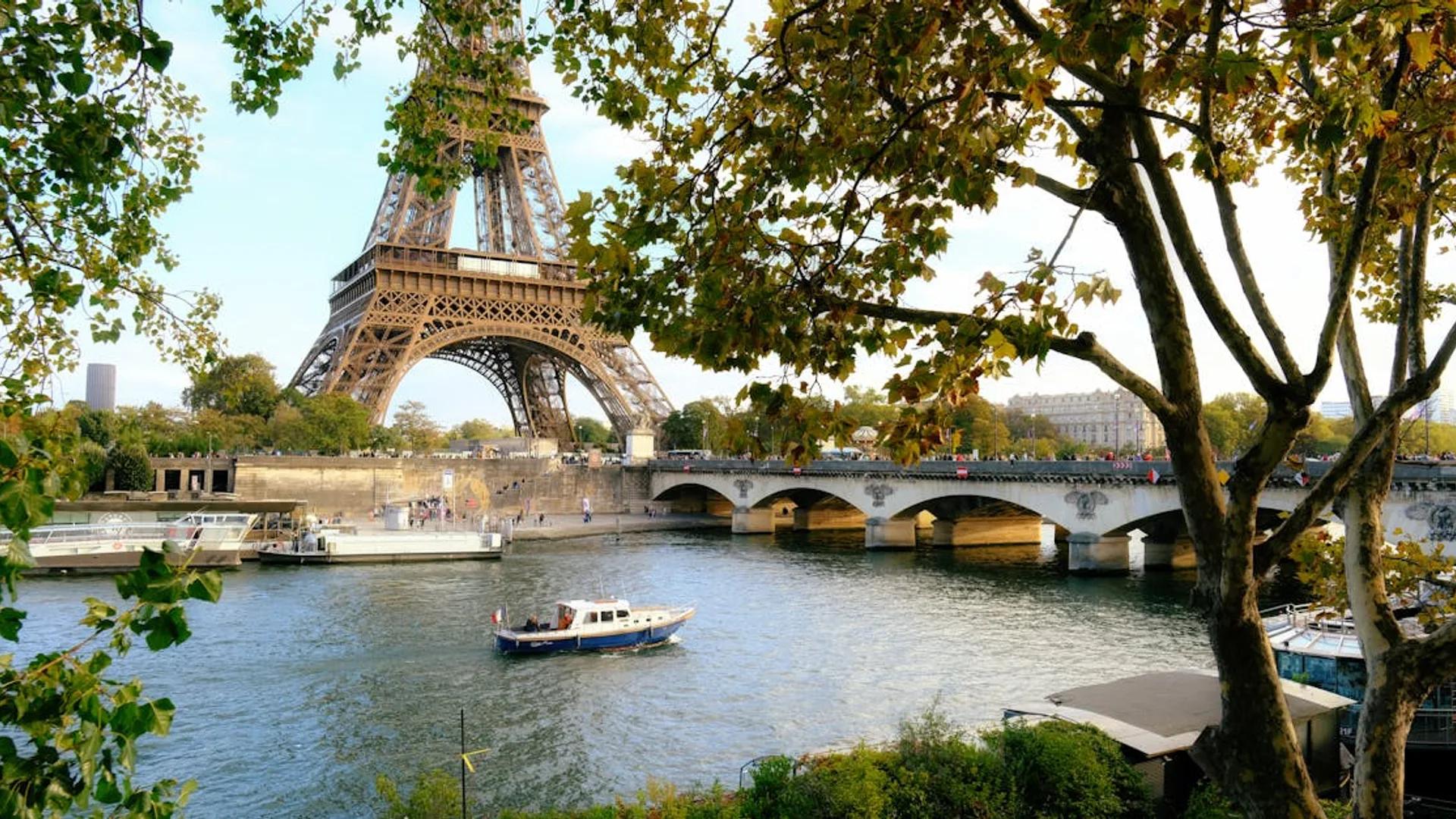
For the view that matters most, skip the Eiffel Tower queue and take the Métro to Trocadéro at dusk. Stand at the balustrade. Watch the tower light up — not because it is new to you, but because the particular pleasure of Paris is seeing something you have always known and discovering that the reality exceeds the image. This is the city’s permanent trick, and it never stops working.
The Parisian Table
Where eating is a form of civic participation
The revolution in Parisian dining over the past decade has been quiet but total. The classic bistro has not disappeared — it has split into two streams. The first preserves the canon with the seriousness of a museum: blanquette de veau, tarte Tatin, wine by the pot. The second has absorbed influences from Tokyo, Lima, Beirut, and Brooklyn, producing a cuisine that is unmistakably Parisian precisely because it refuses to be limited by the label.
The natural wine movement, which began in the caves of the Loire and the Beaujolais, has found its spiritual capital in the bars of the eleventh. These are not precious places. They are loud, crowded, opinionated, and serve food that is designed to accompany argument. A good evening here — a plate of charcuterie, a bottle of something cloudy and alive, a conversation with the person at the next table who turns out to be a winemaker from Jura — is worth any number of Michelin stars.
Breakfast, however, remains sacred and unchanging. A croissant from a boulangerie that bakes on-site. Coffee in a cup, not a paper vessel. The morning paper, or its digital equivalent, consulted with the same ceremonial attention. This is not a meal. It is a daily renewal of citizenship in a city that takes its pleasures seriously, and expects you to do the same.
Our concierge team at Aurelle designs itineraries tailored to your pace and preferences.
Reach Our Concierge