Bali Decoded
The Insider’s Five Balis
The mistake most first-time visitors make with Bali is treating it as a single destination. It is not. It is an archipelago of moods compressed into an island the size of a large county, where you can move from a sacred monkey forest to a beach club in forty-five minutes and feel as though you have crossed a border. The rice terraces of Ubud and the surf breaks of Uluwatu share an island but not a sensibility. Understanding this is the difference between visiting Bali and experiencing it.
The island’s genius is its ability to be everything simultaneously: sacred and hedonistic, ancient and contemporary, crowded and serene. A temple ceremony with thousands of worshippers in white and gold happens beside a road jammed with motorbikes. A yoga retreat operates within earshot of a nightclub. Offerings of flowers and incense are placed on the pavement outside a boutique selling Danish furniture. This is not contradiction. This is Bali.
Ubud
The spiritual centre that keeps its secrets
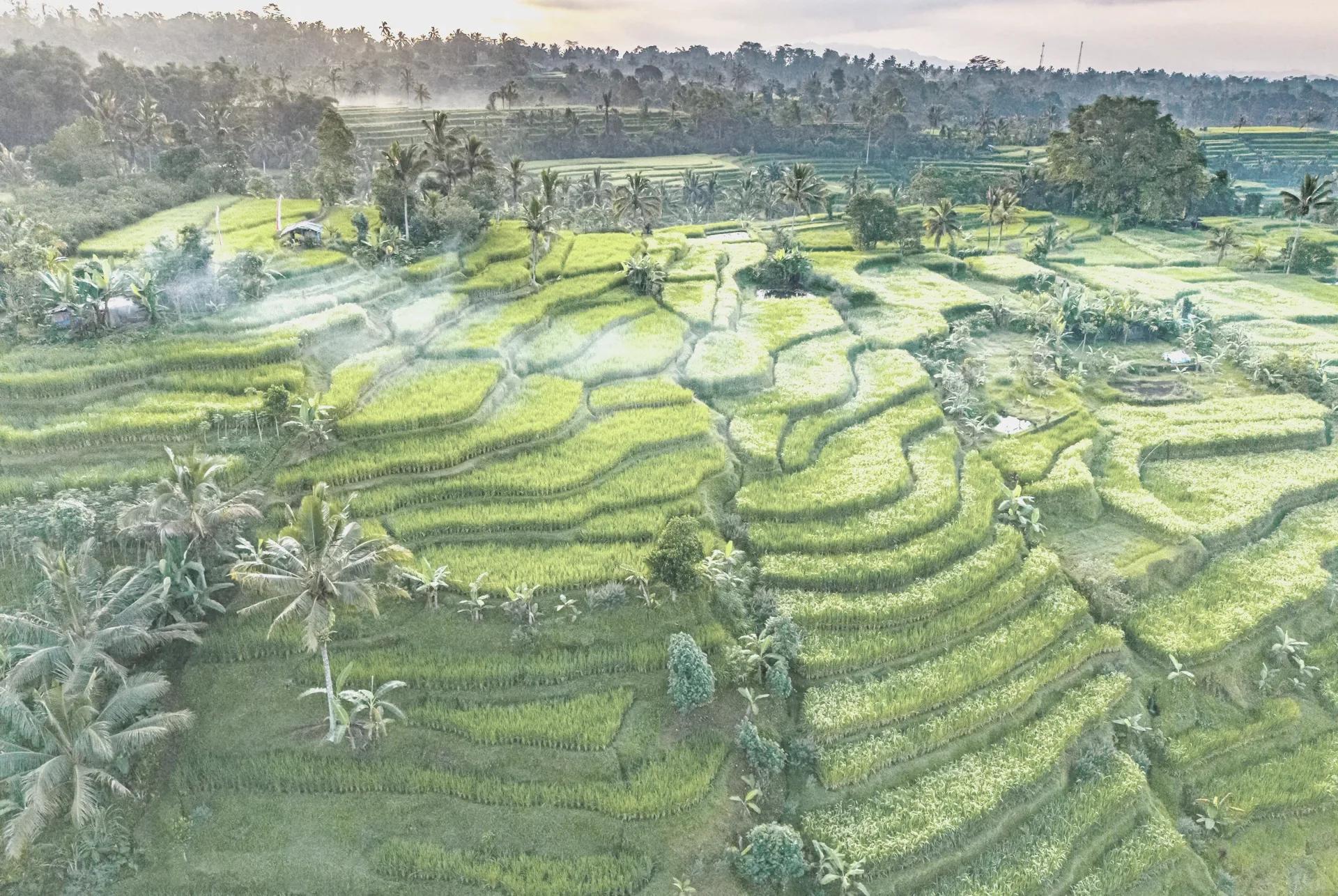
Ubud is the Bali that most people imagine when they close their eyes: terraced rice paddies, gamelan music drifting from a temple, a wellness retreat where the day begins with yoga and ends with a Balinese massage. All of this exists, and all of it is genuine, even when it is also curated for visitors. The distinction between authentic and performed blurs in Ubud, which is perhaps the most Balinese thing about it — in Balinese Hinduism, performance is devotion.
The real Ubud is not on Monkey Forest Road. It is in the villages to the north and east — Tegallalang, Tampaksiring, Penestanan — where the rice terraces are working farms, not photo opportunities, and where a homestay costs a fraction of a resort and delivers an experience no resort can replicate: dinner with a Balinese family, watching the offerings being made, understanding that the beauty of this place is not a backdrop but a practice.
Seminyak
Where the island meets the world
Seminyak is Bali’s most cosmopolitan neighbourhood, which means it is the Bali that most resembles everywhere else — boutique hotels, concept stores, restaurants where the chef trained in Copenhagen. This is not a criticism. It is an acknowledgment that some travellers want world-class dining and design alongside their tropical experience, and Seminyak delivers both with an ease that cities ten times its size struggle to match.
Uluwatu
Cliffs, surf, and the temple at the edge
Uluwatu is Bali’s southern tip: limestone cliffs dropping into the Indian Ocean, some of the best surf breaks in Southeast Asia, and a clifftop temple where the Kecak fire dance is performed at sunset against a backdrop of crashing waves and silhouetted sky. The luxury villas here — perched on the cliff edge with infinity pools that appear to merge with the ocean — are among the most dramatically sited accommodations on the island.
Sidemen
The Bali that Bali used to be
If Ubud is what Bali looks like when it knows it is being watched, Sidemen is what it looks like when it does not. This valley in eastern Bali — reached by a road that discourages casual visitors through sheer narrowness — is rice terraces, volcanic views, and an unhurried pace that even Ubud has lost. The accommodation is simpler, the restaurants fewer, the Instagram presence minimal. This is the Bali that experienced travellers whisper about and first-timers discover on their second trip.
Mount Agung, Bali’s holiest and highest peak, dominates the valley like a benevolent presence. On clear mornings, its perfect cone catches the first light and holds it, and the rice terraces below glow green-gold, and the only sound is roosters and running water, and you understand, suddenly and completely, why people have been calling this island paradise for centuries.
Our concierge team at Aurelle designs itineraries tailored to your pace and preferences.
Reach Our Concierge