Black Sand & Blue Ice
Where the Earth Is Still Being Made
The drive from Reykjavík to Vík is not a transfer. It is a education in what the earth looks like when it has not yet decided what it wants to be. In the space of three hours, the landscape cycles through moods that most countries spread across entire continents: moss-covered lava fields, horse-grazed valleys, a glacier the size of a small country appearing on the horizon like a wall of compressed time.
Iceland’s south coast is where the island’s two defining forces — fire and ice — meet the Atlantic with maximum drama. The beaches are black because the sand is volcanic. The waterfalls are massive because the rivers are glacial. The light, when it cooperates, is the colour of hammered silver. And the silence, between the wind and the waves, is the kind that makes you aware of your own breathing.
Reynisfjara
The beach that rewrites the colour palette
Every beach you have ever visited has prepared you to associate sand with warmth: golden, white, sun-bleached. Reynisfjara removes that association entirely. The sand here is coal-black, the basalt columns rise in hexagonal perfection like a cathedral organ, and the waves arrive with a violence that the warning signs do not exaggerate. This is not a beach for swimming. It is a beach for standing at the edge of and reconsidering your relationship with the ocean.
The basalt stacks of Reynisdrangar, rising from the surf like petrified trolls — which, according to Icelandic folklore, is exactly what they are — are best seen in the grey half-light of an overcast morning, when the distinction between sea and sky dissolves and the stacks appear to float. Photographers will spend hours here. Everyone else will spend enough time to understand that some landscapes are not beautiful in the conventional sense. They are something older and more unsettling than that.
The Glacier Lagoon
Jökulsárlón and the art of watching ice die
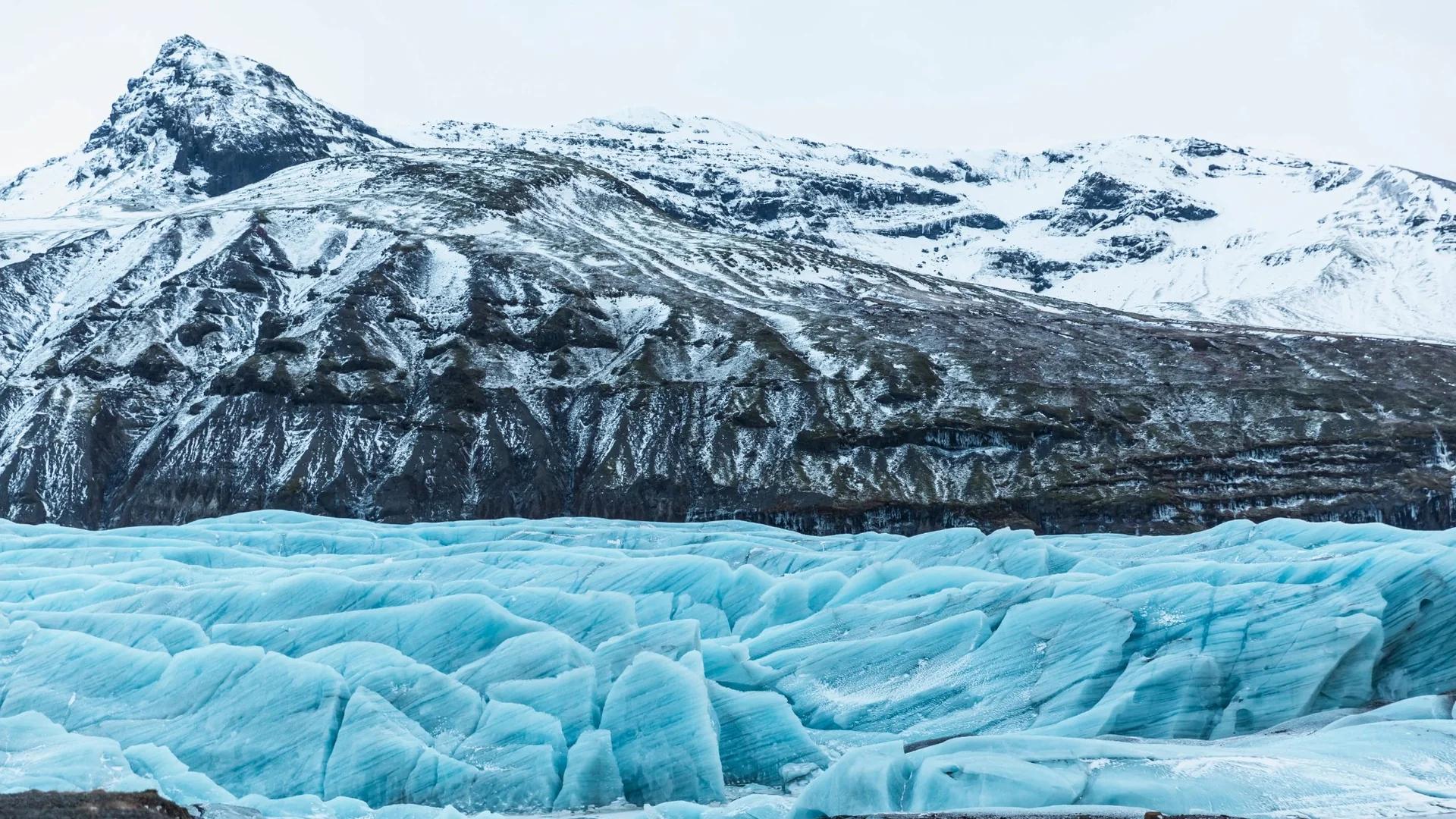
Jökulsárlón is the place where Breiðamerkurjökull — a tongue of the vast Vatnajökull ice cap — calves icebergs into a lagoon that did not exist a hundred years ago. The glacier is retreating, and the lagoon is growing, and the icebergs that float across its surface are blue, white, black-streaked, and ancient. Some of this ice fell as snow during the Middle Ages. It has been compressed into crystal, flowed downhill for centuries, and is now melting into the Atlantic. You are watching climate history in real time, and it is both beautiful and profoundly uncomfortable.
Across the road, Diamond Beach earns its name: chunks of glacier ice wash up on the black sand and sit there, translucent and glittering, until the tide reclaims them. The contrast — black sand, clear ice, white surf — is so stark it looks curated. It is not. It is simply what happens when a glacier meets the sea, and it will not happen here forever.
The Waterfalls
Skógafoss, Seljalandsfoss, and the ones without names
Iceland has more waterfalls than most countries have roundabouts, and the south coast concentrates the greatest hits within a two-hour drive. Skógafoss drops sixty metres in a single curtain of white water that generates its own weather system — on sunny days, the rainbow is so reliable it feels like a special effect. Seljalandsfoss offers the rare pleasure of walking behind the falls, through a cave of spray and roar that leaves you soaked and grinning.
But the waterfalls worth seeking are the ones without car parks. Pull over where a river crosses under the road. Follow the sound upstream for ten minutes. You will find a cascade that no guidebook mentions, in a gorge that no one else is visiting, and you will understand why Icelanders — who live among more natural beauty per square kilometre than almost anyone on earth — never seem impressed by waterfalls. When the extraordinary is ordinary, you develop a different relationship with wonder.
The Stay
Shelter at the edge of things
Accommodation on the south coast tends toward the intimate: converted farmhouses, design-forward lodges with geothermal heating, boutique hotels where the restaurant sources everything from the farm next door. The best properties understand that the view is the amenity — floor-to-ceiling glass, outdoor hot tubs positioned for northern lights, and the kind of thoughtful minimalism that lets the landscape do the talking.
What you will not find is excess. Iceland does not do excess. It does warmth, shelter, good bread, excellent lamb, and the particular comfort of being indoors while something magnificent and slightly terrifying happens outside the window. This is the country’s gift to the traveller: the reminder that luxury is not always about abundance. Sometimes it is about the right amount of the right things, in the right place, at the right time.
Our concierge team at Aurelle designs itineraries tailored to your pace and preferences.
Reach Our Concierge