Five Coasts, One Island
A Connoisseur’s Sri Lanka
Sri Lanka is an island that contains multitudes. In a country smaller than Ireland, you can walk through a two-thousand-year-old city, take a train through tea plantations at cloud level, surf a point break at sunset, track leopards through dry-zone scrubland, and swim off an empty beach on a coast that most visitors have never heard of. The island’s compact scale is its greatest asset: no internal flight takes more than an hour, and driving times between regions are measured in scenic hours rather than tedious days.
The mistake is trying to see it all in a week. Sri Lanka rewards the longer stay — ten days minimum, fourteen if you want to include the east coast — and the willingness to let each region breathe. The Cultural Triangle alone deserves three nights. The hill country wants two. Yala and the south coast each ask for their own pace. Rush it, and you will see the landmarks but miss the rhythm. And in Sri Lanka, the rhythm is the point.
The Cultural Triangle
Ancient cities and sacred peaks
The Cultural Triangle — the area defined by the ancient capitals of Anuradhapura, Polonnaruwa, and the rock fortress of Sigiriya — is Sri Lanka’s spiritual and historical heart. Sigiriya, a fifth-century fortress built on a two-hundred-metre rock column, is the island’s most dramatic sight: climb the narrow stairs, past the frescoes of celestial maidens that have been on the rock face for fifteen hundred years, and emerge onto a summit that once held a royal palace and now holds one of the finest panoramic views in Asia.
Hill Country
Tea-draped mountains and the cool heart of Ceylon
The train from Kandy to Ella is regularly cited as one of the most beautiful rail journeys in the world, and it is — but not for the reasons the photographs suggest. The real pleasure is not the view from the open door (spectacular though it is, as the train winds through tea plantations at altitude) but the experience of travelling slowly through a landscape that was built for slow travel: colonial-era stations, tea pickers on the slopes, waterfalls appearing and disappearing in the mist.
South Coast
Galle Fort, surf breaks, and whale watching
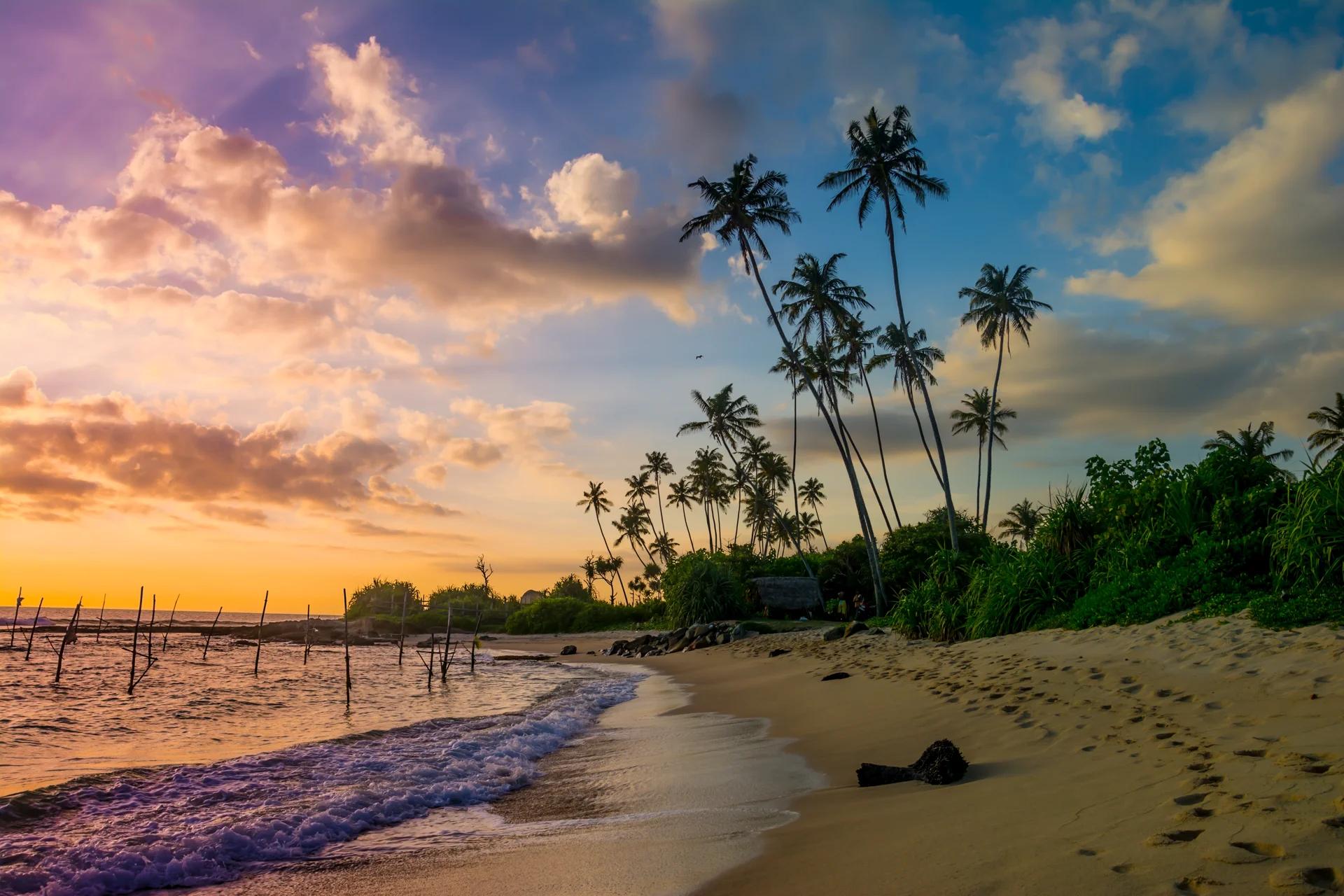
The south coast is Sri Lanka at its most accessible and its most rewarding. Galle Fort — a UNESCO-listed Dutch colonial fortress on a headland — is the island’s most atmospheric town: rampart walks at sunset, boutique hotels in converted merchants’ houses, and a restaurant scene that has quietly become one of the best in South Asia. Beyond Galle, the coast unfolds in a succession of surf breaks, stilt fishermen, and empty beaches that the development has not yet reached.
Yala
The world’s highest density of leopards
Yala National Park occupies Sri Lanka’s southeastern corner and contains the highest concentration of leopards per square kilometre on earth. Unlike African game drives, where the big cats are often distant, Yala’s leopards have habituated to vehicles and can be observed at close range — draped on rocks, drinking from water holes, occasionally crossing the road with the unhurried confidence of an animal that knows it is the apex predator.
East Coast
Undiscovered beaches, surf breaks, and Tamil Hindu traditions
The east coast is Sri Lanka’s frontier: less developed, less visited, and — between May and September, when the southwest monsoon makes the south coast grey and choppy — bathed in sunshine and flat calm. Trincomalee’s natural harbour is one of the finest in the world, and its surrounding beaches — Nilaveli, Uppuveli — are the kind of empty, palm-fringed crescents that the south coast was thirty years ago. Arugam Bay, further south, is a surf town with an emerging food scene and the relaxed energy of a place that knows it is being discovered but has not yet changed to accommodate the discovery.
Our concierge team at Aurelle designs itineraries tailored to your pace and preferences.
Reach Our Concierge