The Caldera Notebook
An Island Built on Catastrophe
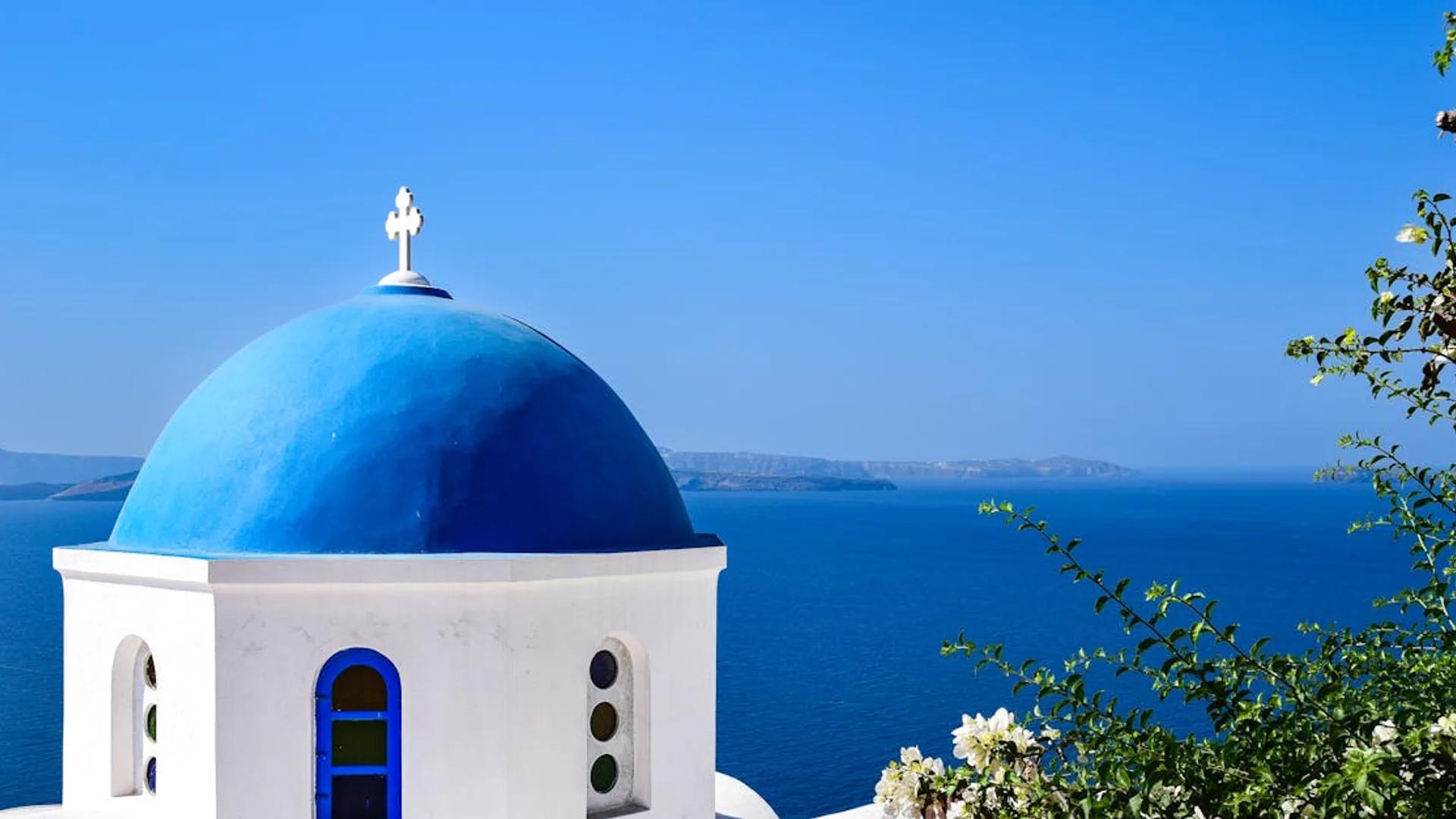
The first thing Santorini teaches you is scale. You arrive expecting whitewashed postcards and sunset cocktails, and what you encounter instead is a wound in the earth — a caldera so vast and so blue that the villages perched on its rim look less like architecture than like lichen, something that grew there slowly and stubbornly over centuries. The beauty of this place is not decorative. It is geological, which is to say it is the beauty of survival.
Thirty-six hundred years ago, a volcanic eruption tore the centre from this island and sent a tsunami across the Mediterranean that may have ended the Minoan civilisation. What remains is a crescent of cliff — three hundred metres of layered pumice and ash, banded in rust and cream and charcoal — and on its edge, a chain of villages that have turned catastrophe into the most photographed coastline in the Aegean. This tension between destruction and beauty is not incidental to the Santorini experience. It is the experience.
Oia at the Margins
Before the crowds and after the light
Everyone comes to Oia for the sunset, and they are not wrong. The daily spectacle at the kastro — when the sun drops into the caldera and the sky cycles through colours that no screen can accurately reproduce — is genuinely extraordinary. It is also, between May and September, attended by several thousand people with smartphones, which rather changes the atmosphere.
The Oia worth knowing exists in the margins of this daily performance. At seven in the morning, when the cruise ships have not yet disgorged their passengers and the light is silver rather than gold, the village reveals its real character: a labyrinth of barrel-vaulted cave houses, connected by stairs that seem to have been designed by someone who understood that the journey between levels should itself be a pleasure.
The path from Oia to Fira — roughly ten kilometres along the caldera rim — is the single best walk on the island, and one of the finest in Greece. It takes three to four hours if you stop, as you should, at the village of Imerovigli, where the cliff path narrows and the view opens into something that feels less like a panorama than a hallucination: the volcanic islands floating in the centre of the caldera, the water shifting between navy and turquoise depending on depth and light, the absolute silence of a landscape that was, not so long ago in geological terms, the inside of a volcano.
Fira and the Vertical City
Layers of civilisation on layers of ash
Fira lacks Oia’s photogenic perfection, and this is precisely its advantage. The island’s capital is a working town — messy, commercial, alive — with a caldera-edge promenade that offers the same views without the same performance of viewing them. The Archaeological Museum, small but impeccably curated, contains frescoes from Akrotiri that are worth the entire trip: images of fishermen, of swallows in spring, of a naval procession, all painted three and a half thousand years ago in colours that still hold.
Below Fira, the old port huddles at the waterline, accessible by cable car, by donkey, or by 588 zigzagging steps that are best descended rather than climbed. The tavernas here serve grilled octopus and cold Assyrtiko — the island’s indigenous white grape, which grows in ground-hugging basket shapes called kouloura to protect it from the wind. Assyrtiko is Santorini in a glass: mineral, volcanic, bone-dry, with an acidity that comes from vines rooted in pumice and watered only by sea mist. It is not a wine for everyone. It is a wine for here.
The Interior
What the caldera cannot show you
Most visitors never leave the caldera edge, which means most visitors miss the island. Santorini’s interior — a gently sloping plain of vineyards, farms, and villages with names tourists cannot pronounce — is where the real life of the island continues, largely indifferent to the spectacle on the rim.
Megalochori, a village of merchant mansions and cave houses, has a central square with a single taverna and a church bell that rings with the particular insistence of a place that expects you to notice. Pyrgos, the island’s highest village, offers a three-hundred-and-sixty-degree view from its Venetian castle ruins that includes, on a clear day, the mountains of Crete. And Emporio, with its medieval fortification and narrow defensive streets, is a reminder that Santorini’s history includes not just volcanic eruptions but pirate raids, Ottoman occupation, and the particular resilience of people who chose to live on the edge of a volcano and never left.
The vineyards that cover the interior are among the oldest in the world — ungrafted vines, some over a hundred years old, trained in their kouloura baskets close to the volcanic soil. A visit to a serious producer — Hatzidakis, Sigalas, Gaia — is not a typical wine tasting. It is a lesson in extremity: how flavour concentrates when the conditions are hostile, how the best wines come from the harshest landscapes, how Santorini’s gift to the glass is the same gift it offers the eye — beauty born from violence, refined by time.
Akrotiri
The Pompeii that no one remembers
Akrotiri is Santorini’s best-kept secret, which is extraordinary given that it is one of the most important archaeological sites in Europe. Buried under metres of volcanic ash by the same eruption that created the caldera, this Bronze Age city was preserved in a state of astonishing completeness: three-storey buildings, indoor plumbing, frescoes of a sophistication that would not be matched in Europe for another millennium.
The modern excavation, sheltered under a bioclimatic canopy, allows you to walk through streets where people lived, traded, worshipped, and — sometime around 1600 BC — packed their belongings and left. No human remains have been found at Akrotiri, which means the inhabitants had warning. They saw the signs. They took what they could carry and they went. What they left behind — the buildings, the art, the drainage systems that would have been the envy of medieval London — tells us everything about how they lived and nothing about where they went.
Visit Akrotiri late in the afternoon, when the tour groups have departed and the light inside the canopy turns amber. Stand in the triangular square at the centre of the ancient city and consider: this place was already a thousand years old when the eruption buried it. The people who lived here had been refining their civilisation for centuries. And then, in the space of a day, the mountain opened and the sea rushed in, and everything they built became a time capsule for people who would not arrive for another three and a half millennia. Santorini’s caldera is beautiful. Akrotiri is the reason it exists.
Our concierge team at Aurelle designs itineraries tailored to your pace and preferences.
Reach Our Concierge