The Unhurried Tuscan Table
Where Every Meal Is an Act of Remembering
There is a particular quality of light in Tuscany that has nothing to do with the sun. It arrives in the weight of a poured glass, in the ochre dust that settles on a farmhouse sill, in the way a cypress-lined road seems to narrow not toward a destination but toward a feeling. You do not visit Tuscany so much as you agree to its terms: slower, warmer, less concerned with the hour.
This is not a region that reveals itself to those in a hurry. The hill towns do not compete for your attention — they wait, stone-quiet, for you to climb. The vineyards do not advertise — they produce, year after year, with the steady confidence of people who have been doing the same thing since the Etruscans. And the food, always the food, arrives not as a performance but as a fact: this is what the land gave us today.
The Chianti Dialogue
Between Florence and Siena, a landscape that speaks in Sangiovese
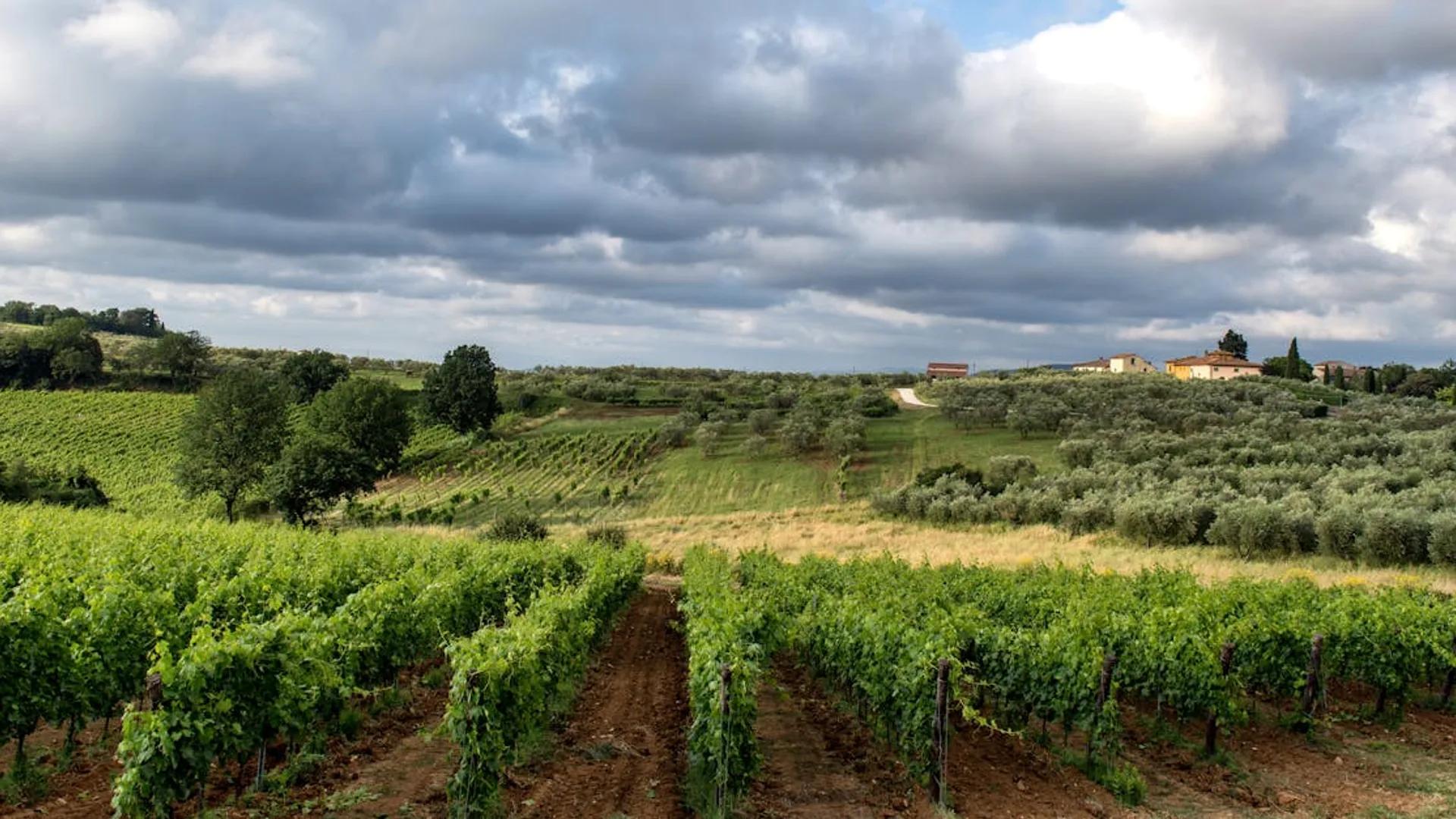
The road from Florence to Siena is not the point. The point is what happens when you leave it — turning onto a white gravel strada that leads to a stone farmhouse where someone’s grandmother is still making pasta by hand, not for tourists but because that is what Wednesday looks like.
Chianti Classico is often misunderstood as a wine region. It is, more accurately, a philosophy of land use — where olive groves and vineyards share the same slopes, where the concept of terroir extends to the bread, the honey, the particular shade of green the hills turn in late May. A serious visit here means sitting with a producer who can trace their family’s relationship with a single vineyard across five generations. It means tasting not just wine but time.
The villages of Radda, Gaiole, and Castellina form a loose triangle that rewards those who treat it as a home base rather than a checklist. Settle into an agriturismo — the word itself suggests the marriage of agriculture and tourism, though in practice it is far more intimate than that — and let the rhythm of the estate dictate your days. Breakfast on the terrace. A morning walk through the vines. Lunch that stretches until the shadows change direction.
The Val d’Orcia
UNESCO’s most beautiful accident
South of Siena, the landscape simplifies itself into something almost abstract: rolling wheat fields, a solitary farmhouse, a line of cypresses against a sky that seems to have been mixed by a Renaissance painter with too much ultramarine. The Val d’Orcia is the Tuscany of postcards, yes, but experiencing it in person reveals something the photographs cannot capture — the silence.
Pienza, the so-called “ideal city” of Pope Pius II, is best approached on foot and in the early morning, when the pecorino shops are still shuttered and the only sound is the echo of your own footsteps on travertine. Montalcino, home of Brunello, rewards patience — both in the aging of its wines and in the quiet afternoons spent on the fortress walls, watching the light shift across a valley that has looked essentially the same for six hundred years.
Between these towns, the thermal baths at Bagno Vignoni offer something increasingly rare in modern travel: the experience of doing absolutely nothing in a place that was designed, centuries ago, for exactly that purpose. The central piazza is not a piazza at all but a pool of warm mineral water, steaming gently into the morning air. There are no lounge chairs. No cocktail menus. Just water, stone, and the particular kind of contentment that comes from surrendering to a place’s original intention.
The Harvest
September light and the art of the vendemmia
If you can arrange your life to be in Tuscany in late September, do. The vendemmia — the grape harvest — transforms the region from a landscape into a workshop. The air smells different: sweeter, more urgent, tinged with the particular perfume of crushed grape skins and damp earth. Tractors replace Fiats on the back roads. Dinner conversations turn technical, passionate, specific.
Several estates welcome guests during harvest, not as spectators but as participants. There is something profoundly satisfying about spending a morning with shears in hand, filling crates with Sangiovese clusters, knowing that the wine from this particular day will not be ready to drink for years. It is an investment in a future pleasure — a concept that Tuscany, more than perhaps any other place on earth, understands implicitly.
The harvest dinner, when it comes, is not a formal affair. Long tables are set in the vineyard or the olive grove. The menu is whatever the kitchen had time to prepare between sorting grapes. The wine is last year’s vintage, poured generously, because in Tuscany the best bottle is always the one that’s open.
The Stay
Where the walls hold stories
Tuscany’s finest accommodations share a common trait: they do not try to improve upon what the land already offers. The best properties — whether a restored medieval borgo or a Medici-era villa — understand that luxury here is not about thread count but about the view from the bedroom window, the quality of the morning espresso, the sound of church bells marking an hour you have no reason to track.
Look for places where the kitchen garden is as important as the wine cellar. Where the staff can tell you which olive tree produced the oil on your table. Where the swimming pool, if there is one, has been positioned not for Instagram but for the particular angle at which the afternoon sun hits the hills. These are the details that separate a Tuscan holiday from a Tuscan experience.
Our concierge team at Aurelle designs itineraries tailored to your pace and preferences.
Reach Our Concierge