Venice Beyond the Crowds
The City That Exists After the Day-Trippers Leave
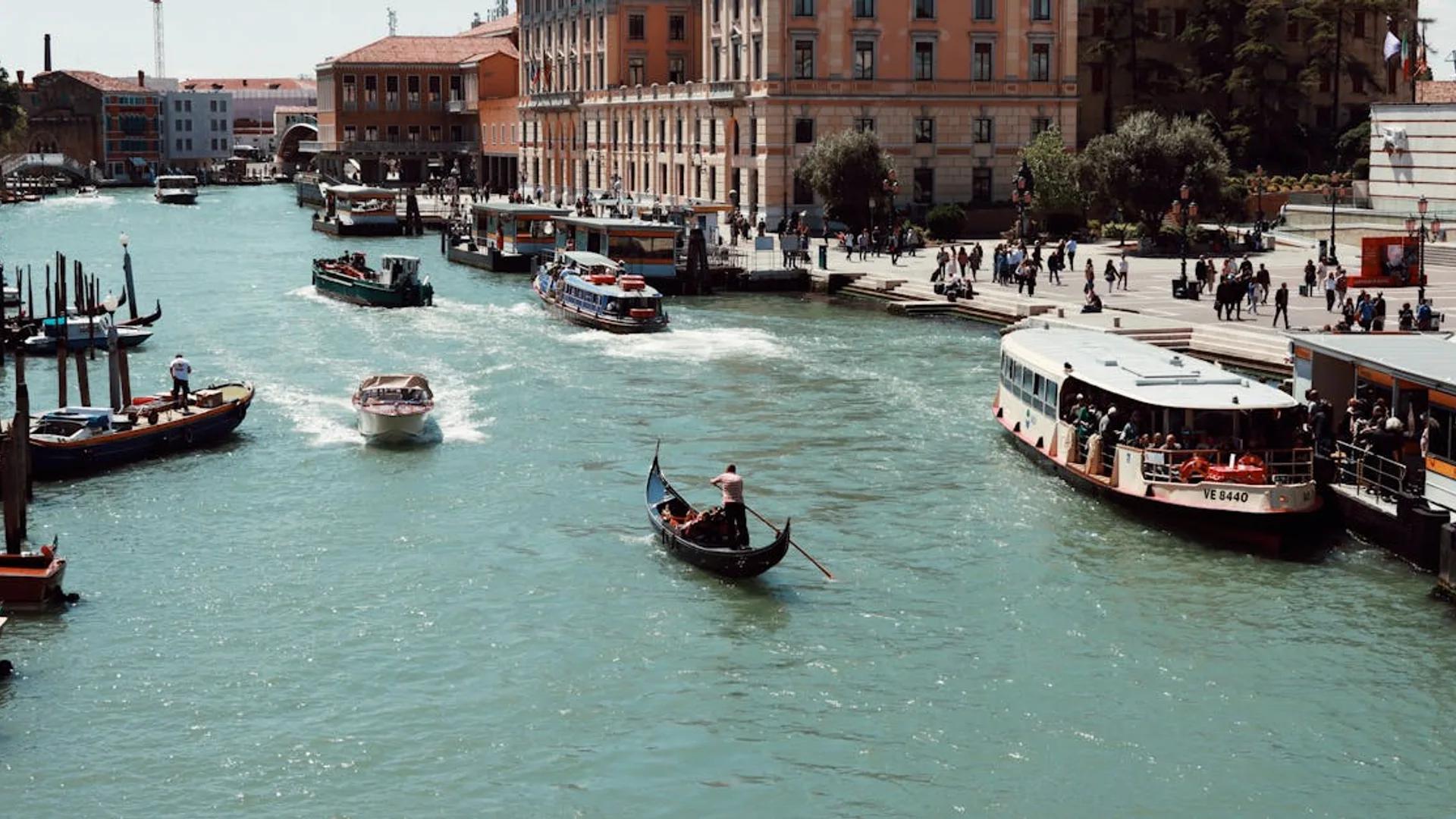
The great irony of Venice is that the thing most likely to ruin your experience of it is other people having the same idea. The city receives roughly thirty million visitors a year, most of whom concentrate on the same half-kilometre corridor between the train station and San Marco, leaving the other hundred and seventeen islands of the archipelago largely to the Venetians and the cats.
The Venice worth knowing is the one that exists in the margins: at seven in the morning, when the vaporetto is carrying workers not tourists and the only sound in Dorsoduro is the slap of water against stone; at ten at night, when the restaurants have emptied and the fondamente become corridors of reflected light; and in November, when the acqua alta floods the piazza and the tourists disappear and the city becomes, briefly and magnificently, itself.
The Bacaro Circuit
Standing, drinking, and the art of the cicchetto
Venice invented the aperitivo. Or at least, Venice perfected the art of standing in a small, crowded room, drinking a glass of ombra — house wine, named for the shadow of the campanile where merchants once sheltered their barrels — and eating small, beautiful things on bread. The bacaro is the city’s most democratic institution: no reservations, no menus, no pretension. You walk in, point at what looks good, and pay a few euros. The quality varies from extraordinary to acceptable, but the experience is always the same: you are participating in a ritual that has been continuous since the fifteenth century.
The best bacari cluster in the Rialto market area and in Cannaregio, away from San Marco. All’Arco, Cantina Do Spade, and Un Mondo di Vino are starting points, not destinations — the correct approach is to have one or two cicchetti and an ombra at each, then move on. By the fourth stop, you will have eaten better than at any sit-down restaurant, spent less than you would on a single main course, and made at least one friend who speaks no English but communicates perfectly through the universal language of pointing at food.
The Lagoon
Beyond Murano and Burano, the islands that silence built
Everyone visits Murano for glass and Burano for colour, and both deserve the trip. But the lagoon contains dozens of islands that most visitors never see, and some of them are among the most atmospheric places in the Mediterranean. Torcello — once the most powerful island in the lagoon, now home to fewer than a dozen permanent residents — contains a seventh-century cathedral with Byzantine mosaics that rival Ravenna, set in a silence so complete you can hear the grass grow.
San Francesco del Deserto, accessible only by private boat from Burano, is a working Franciscan monastery on an island of cypress trees and bird calls. The monks will show you the garden where Saint Francis supposedly planted his staff, which grew into a tree. Whether you believe this is beside the point. The point is the quality of peace on an island where people have been practising it for eight hundred years.
The Biennale Rhythm
Art, architecture, and the city as exhibition
Every odd year, the Art Biennale transforms Venice into the world’s largest gallery; every even year, the Architecture Biennale does the same. During these months, the city acquires a second layer: national pavilions in the Giardini, exhibitions in abandoned palazzi, installations in churches that have not been open to the public for decades. The quality is uneven — this is contemporary art, after all — but the experience of encountering it in Venice, where the boundary between art and architecture dissolved centuries ago, is unlike anything else.
Time your visit for the Biennale’s first or last weeks, when the professional crowd has thinned but the exhibitions remain open. Bring comfortable shoes. Get lost on purpose. And remember that the greatest work of art in Venice is Venice itself — a city that should not exist, built on wooden pilings in a lagoon, sinking imperceptibly, and more beautiful for its impermanence than any painting in any pavilion.
The Venetian Table
Seafood, spritz, and the lagoon on a plate
Venetian cuisine is lagoon cuisine: soft-shell crabs in spring, cuttlefish ink in winter, sardines in saor year-round. The best restaurants — and they are increasingly excellent, after decades of tourist-trap mediocrity — source from the Rialto fish market and the vegetable gardens of Sant’Erasmo, the lagoon’s agricultural island. A plate of raw scampi at a table overlooking a quiet canal, with a glass of Soave from the Veneto hills, is as close to perfection as lunch gets.
Our concierge team at Aurelle designs itineraries tailored to your pace and preferences.
Reach Our Concierge